



 |
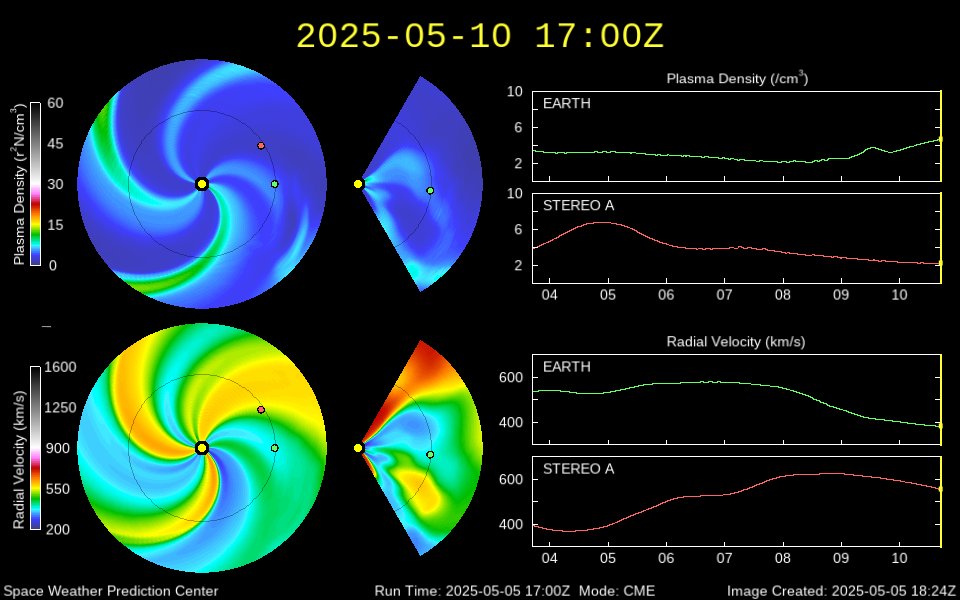
Product Description: Animation of the 2-D structure of the solar wind and Coronal Mass Ejections (CMEs) as they propagate from the Sun to Earth derived from a Magneto-Hydrodynamic model of the solar wind. When CMEs released by the Sun are detected, storm-prediction runs are made by including estimated CME parameters in the ambient solar wind model. The model output provides one to four days advance warning of CME arrival and structures in the solar wind that create enhanced geomagnetic activity and high levels of radiation belt electron. Target Users: Product users include industries sensitive to strong variations in the geomagnetic field, such as: electric power, pipeline, drilling, and surveying. Users also include the satellite industry due to the impacts of enhance radiation belt levels on satellite systems. |
NOAA Scales mini
R1 (Minor) Radio Blackout Impacts

HF Radio: Weak or minor degradation of HF radio communication on sunlit side, occasional loss of radio contact.
Navigation: Low-frequency navigation signals degraded for brief intervals.
More about the NOAA Space Weather Scales
Navigation: Low-frequency navigation signals degraded for brief intervals.